Conservation plan
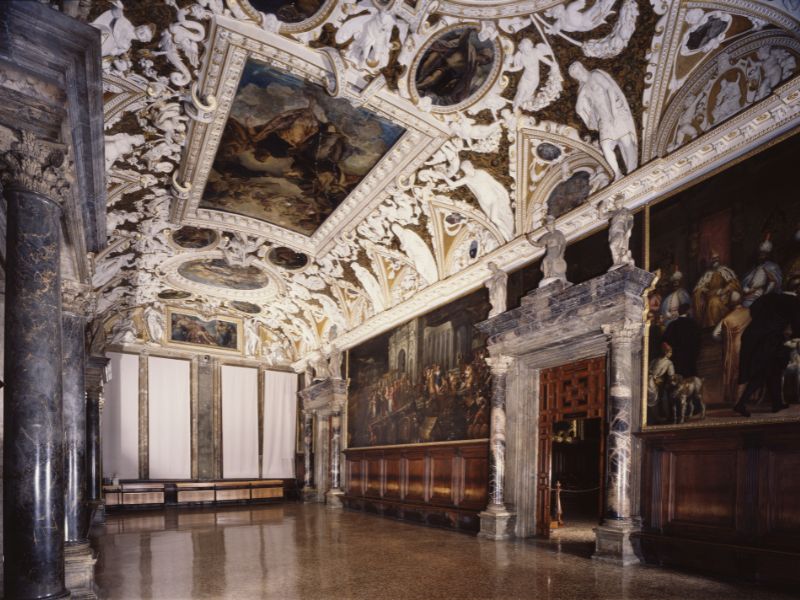
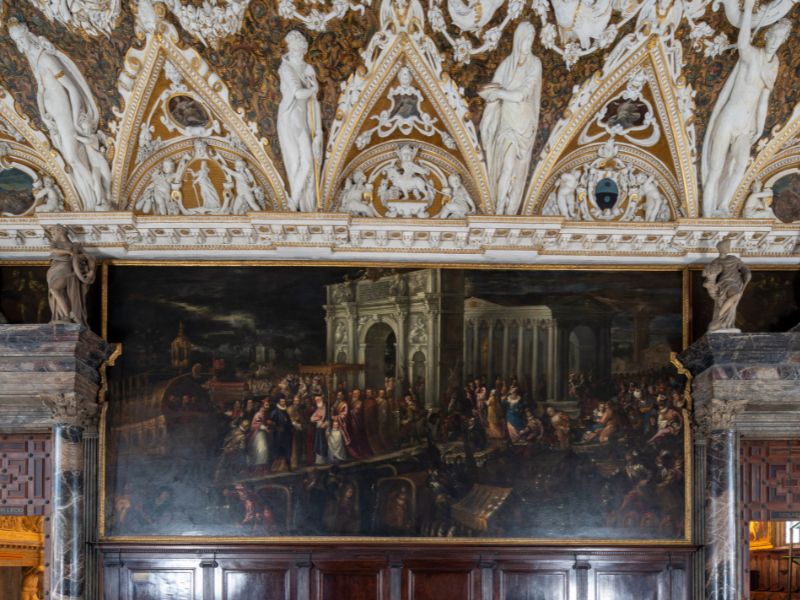
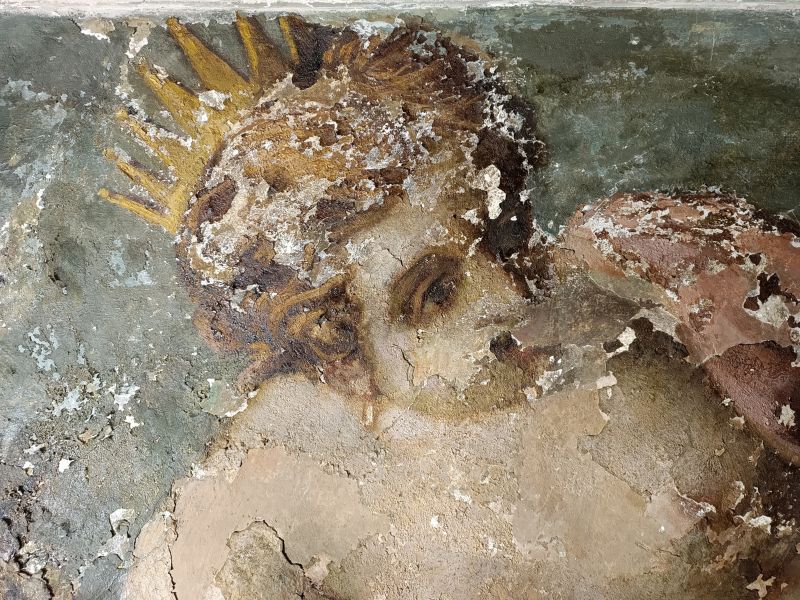
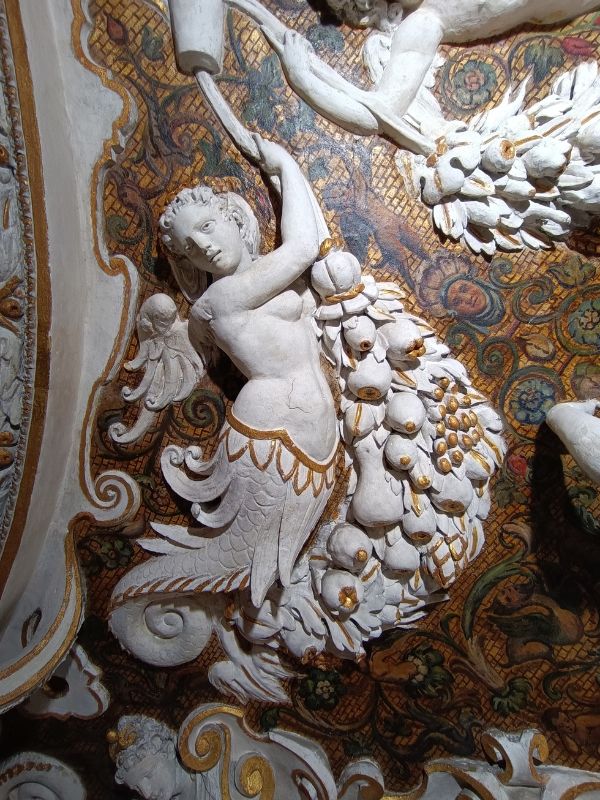
The current conservation treatment consists of phases I and II that are a part of a series of major interventions that will focus on the decorative aspects of the room over the next several years. These first two phases will focus on the vaulted ceiling with stuccos and frescoes and the four stone portals surmounted by sculptures and monochrome painted canvases.
The structural integrity of the ceiling vault will be verified to determine if any repairs or additional reinforcements are needed. The precarious state of conservation of the paintings, stucco, and stone will be addressed through the consolidation, cleaning, and integration of these artworks using only materials and techniques that not only respect and preserve the original decoration, but that are fully reversible in the future. To further restore the integrity and legibility of the artworks, any inappropriate or detrimental non-original surface layers that were applied during numerous previous interventions will be revised or replaced, such as oxidized varnishes, altered repainting, and surface protectants.
During your visit to the Doge's Palace, you can observe the treatment underway on a selection of canvas paintings from this room in a special laboratory area just outside of the Sala del Maggior Consiglio.
The Room of the Four Doors
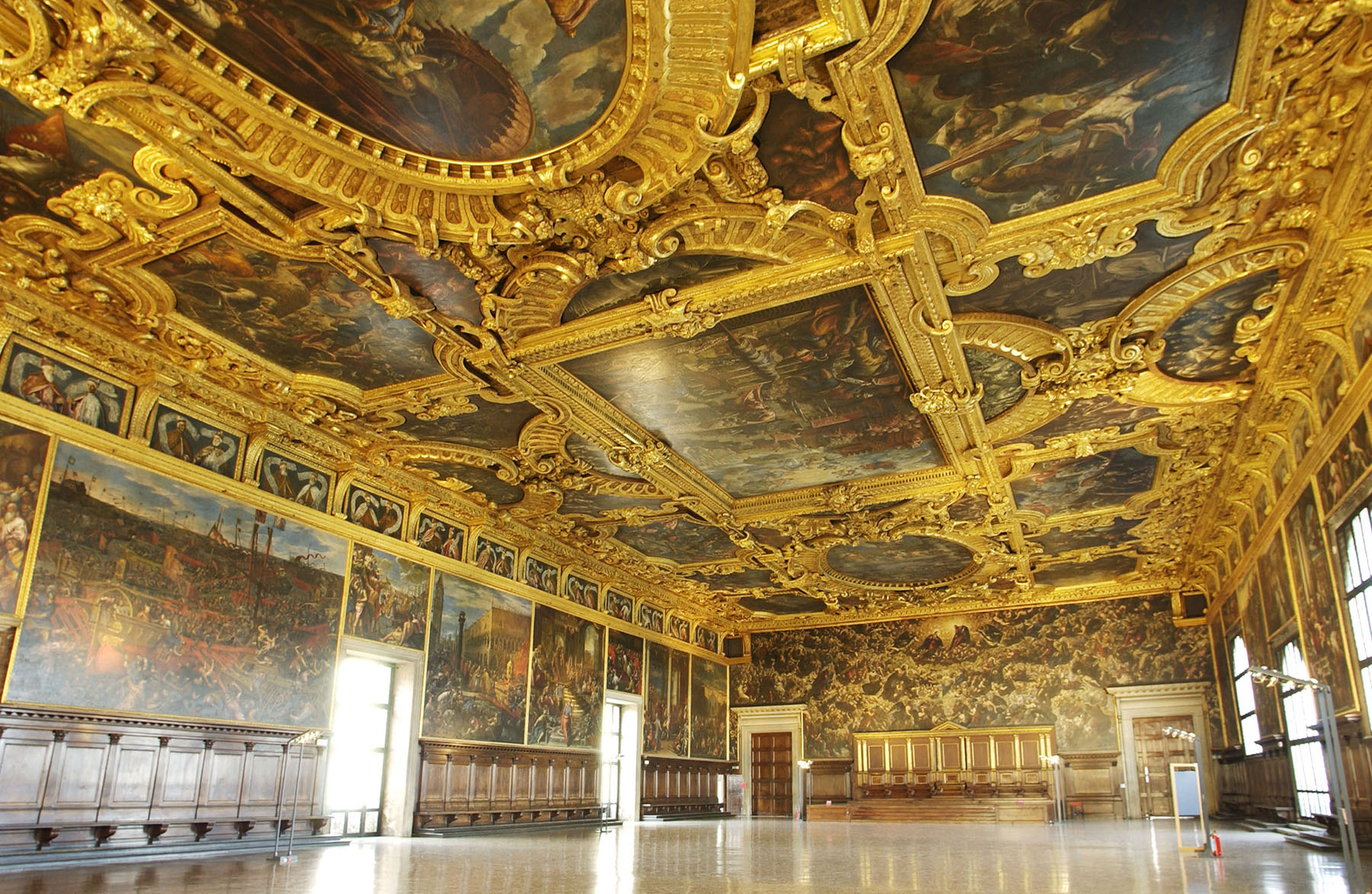
The Room of the Four Doors, also known as the "Sala delle Quattro Porte," is a remarkable public space in the Doge's Palace. It served as a passageway to the meeting rooms of Venice's powerful political bodies—the Senate, the Collegio, and the Council of Ten. Influential patricians, foreign diplomats, and royal guests used it to access offices and meet government officials.
Following a devastating fire on May 11, 1574, that destroyed part of the Doge's Palace, a campaign to rebuild and redecorate the room was immediately launched, involving important artists of the era. Antonio da Ponte, the head architect of the Venetian Republic (proto), directed the work, with architect Andrea Palladio contributing to the project plans.
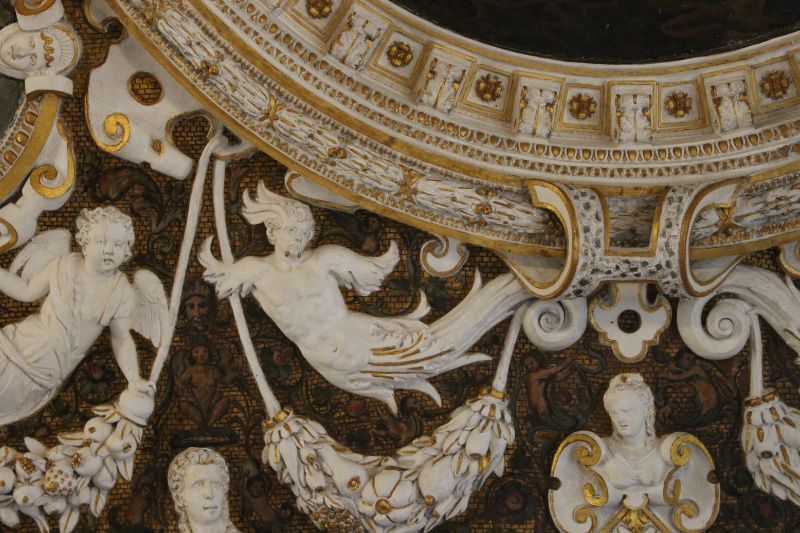
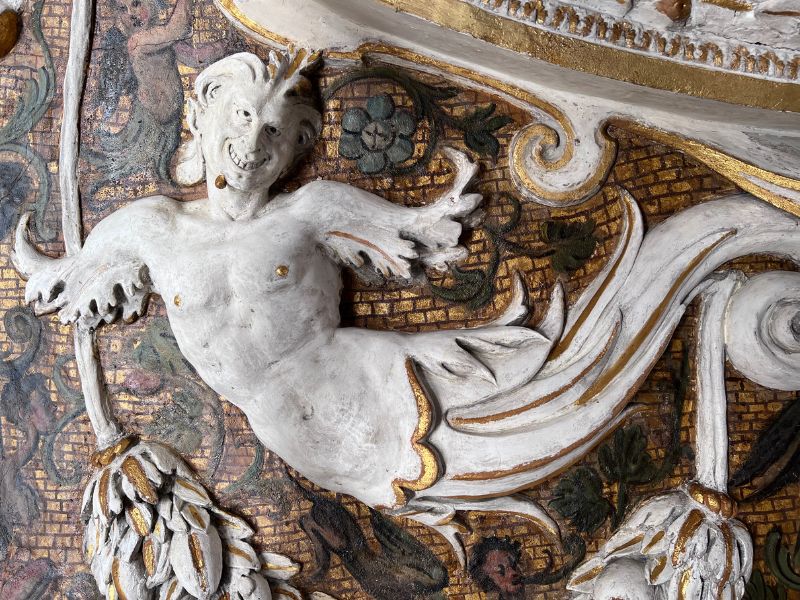
Between 1575 and 1576, Giovanni Battista Cambi, known as "il Bombarda," carved the ceiling's stucco moldings and mythological sculptures. Nearly a year later, the vault was enriched with intricate grotesque decorations.
From 1576-1577, Jacopo Tintoretto frescoed the ceiling and lunettes with allegorical scenes. The iconographic program for these frescoes was devised by humanist Francesco Sansovino to glorify Venice's mythical birth, independence, power, and virtues. Due to condition issues, many of the frescoes were restored and repainted by Nicolò Bambini in 1713.
Gallery